
ServiceNow runs the enterprise ITSM world, but its $100-per-agent licensing, months-long rollouts, and heavy customization needs push plenty of teams to look for something leaner.
If you're evaluating a switch, the strongest ServiceNow alternatives right now are Freshservice for mid-market value, Jira Service Management for Atlassian shops, and BMC Helix for AI-first enterprise operations.
I compared nine ServiceNow alternatives across the factors that drive a move: ITSM feature depth, pricing and total cost, implementation speed, and AI capabilities. I mapped each against the same evaluation criteria a real IT team uses when scoping a replacement.
Here's the ranked list, what each platform does well, where it falls short, honest pricing, and who it's built for. The goal is to match a tool to your actual ITSM needs, since the right fit depends on your size, stack, and how much of ServiceNow's depth you use.
9 best ServiceNow alternatives: TL;DR
- Freshservice: Best overall value for mid-market ITSM
- Jira Service Management: Best for Atlassian and dev-centric teams
- BMC Helix: Best for AI-first enterprise operations
- Ivanti Neurons: Best for combining ITSM with endpoint management
- HaloITSM: Best for predictable all-inclusive pricing
- ManageEngine ServiceDesk Plus: Best for on-premises and transparent pricing
- Zendesk: Best for support-led teams handling internal and external tickets
- SysAid: Best for ITSM with strong asset management and AI automation
- SolarWinds Service Desk: Best for mid-market IT asset management
Why look for ServiceNow alternatives?
ServiceNow is a powerful platform. It handles complex, cross-departmental workflows, offers hundreds of integrations, and clears compliance and audit bars that lighter tools miss.
For large enterprises with the budget and an implementation team, it earns its place. A few recurring pain points send teams looking elsewhere.
High total cost of ownership. ServiceNow Standard ITSM runs around $100 per agent monthly, and the Pro tier needed for AI features reaches $160 or more. Implementation often multiplies the license fee three to five times.
Long implementation timelines. Enterprise deployments frequently take months and lean on external consultants. Mid-market teams rarely have the runway or budget for that kind of rollout.
Overkill for many teams. Most growing companies don't need the full suite of change management, CMDB, and cross-department workflows. They're solving a narrower problem and paying for depth they never use.
Heavy customization burden. Tailoring ServiceNow to your processes takes dedicated administrators and ongoing upkeep, which adds cost and slows down change.
Which ServiceNow alternative should you choose?
Here's the quick version before the deep dives:
- Choose Freshservice if you want full ITSM at mid-market pricing with fast setup, though it lacks ServiceNow's deepest enterprise customization.
- Choose Jira Service Management if you're already in the Atlassian stack, less ideal for non-IT workflows outside it.
- Choose BMC Helix if you need enterprise AIOps for complex multi-cloud operations, though rollouts still run three to six months.
- Choose ManageEngine if you want transparent pricing and an on-premises option, less polished than the cloud-native tools.
- Stick with ServiceNow if you're a large enterprise needing one platform for complex cross-departmental workflows, with the budget and team to run it.
9 best ServiceNow alternatives: at a glance
Pricing correct as of July 2026. Verify with vendor.
The 9 best ServiceNow alternatives
1. Freshservice
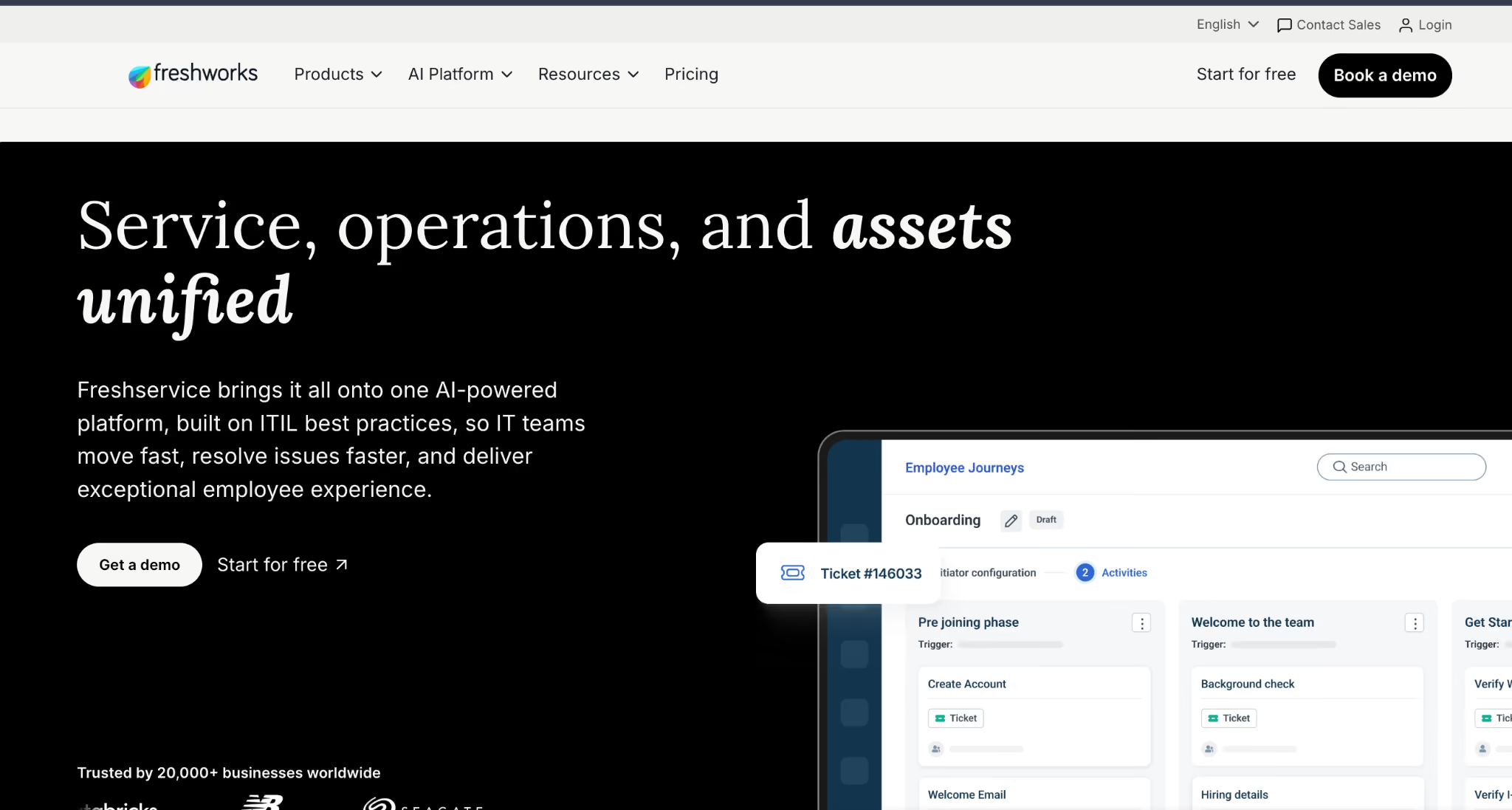
Freshservice is the best overall ServiceNow alternative for mid-market teams that want full ITSM without enterprise cost or complexity.
Built by Freshworks, it delivers incident, problem, change, and release management in a cloud-native platform that's faster to learn than ServiceNow. It's the go-to for organizations between 500 and 15,000 end users.
Key features
- ITIL-aligned ITSM: Incident, problem, change, and release management out of the box.
- Freddy AI: Ticket classification, agent copilot, and self-service deflection built in.
- Fast deployment: Clean interface and unlimited end-user licensing speed up rollout.
Pros
- ✅ Full ITSM at 55 to 70% below ServiceNow total cost
- ✅ Transparent per-agent pricing and quick setup
- ✅ Strong AI features on higher tiers
Cons
- ❌ Most ITSM depth sits on Pro or higher, so the headline price understates real cost
- ❌ Lacks ServiceNow's deepest enterprise customization
Best for
- Mid-market IT teams wanting full ITSM fast
- Organizations replacing ServiceNow to cut cost and complexity
Pricing
Freshservice starts at $19/agent monthly for Starter, with Growth at $49 and Pro at $99, all billed annually, and Enterprise on a custom quote. See Freshservice's pricing.
2. Jira Service Management
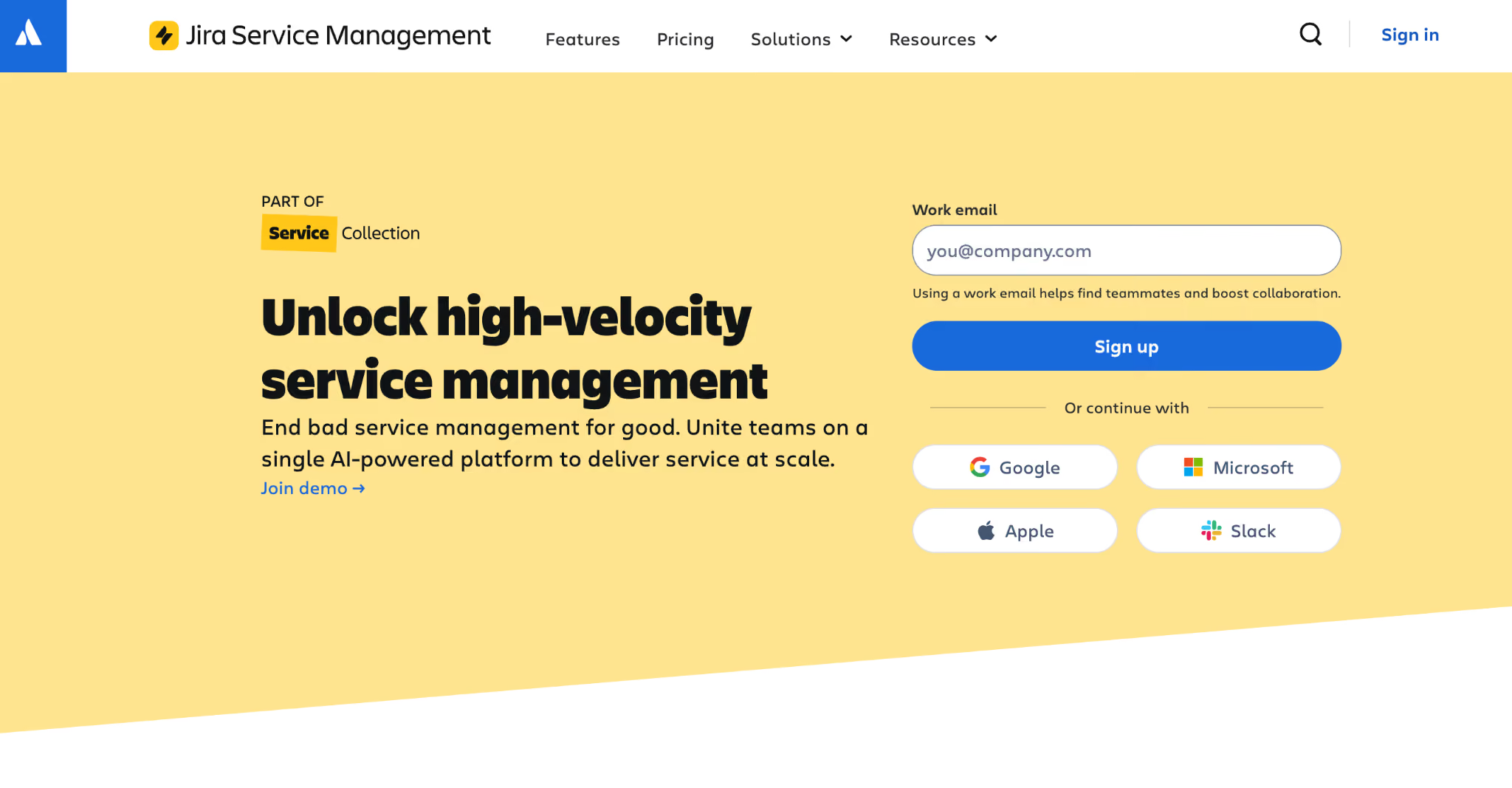
Jira Service Management is the best ServiceNow alternative for teams already in the Atlassian stack.
It brings ITSM to the Jira platform, integrating tightly with Confluence, Bitbucket, and existing dev workflows. For engineering-adjacent IT teams, that continuity is the draw.
Key features
- Atlassian-native: Integrates directly with Jira, Confluence, and Bitbucket.
- On-call management: Premium adds alert routing and escalation covering core PagerDuty workflows.
- Dev-IT alignment: Connects service requests to engineering work in one place.
Pros
- ✅ Natural fit for Atlassian shops
- ✅ Useful free plan for up to 3 agents
- ✅ Cheaper entry than Freshservice at comparable IT functionality
Cons
- ❌ Less suited to non-IT workflows outside the Atlassian stack
- ❌ Lacks the enterprise depth of ServiceNow
Best for
- Tech companies and startups already using Jira
- IT teams wanting ITSM tied to engineering workflows
Pricing
Jira Service Management has a free tier for up to 3 agents, with Standard at $17.65/agent monthly and Premium at $44.27/agent monthly, billed annually. See Atlassian's pricing.
3. BMC Helix
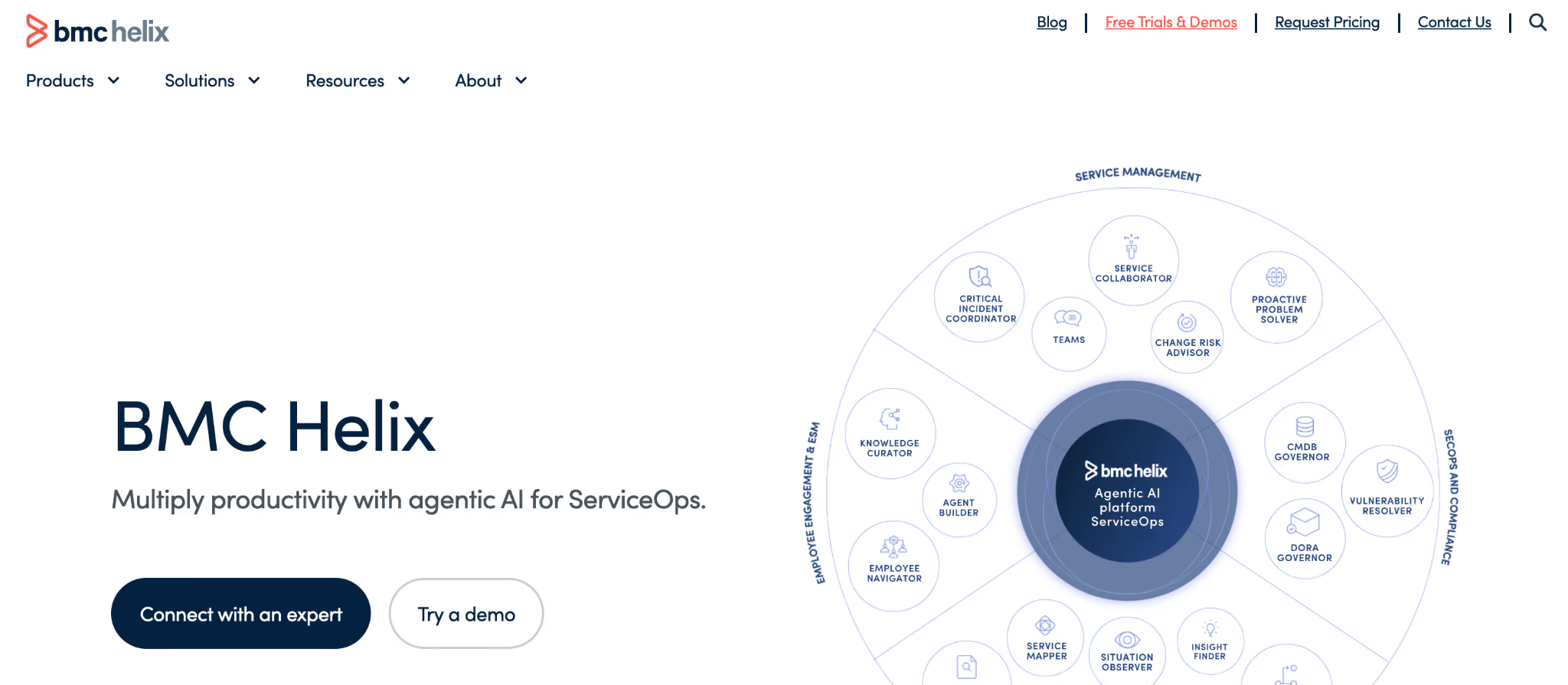
BMC Helix is the best ServiceNow alternative for large enterprises that need AI-first operations across complex, multi-cloud environments.
It pairs full ITSM with a strong AIOps layer, making it a true enterprise peer to ServiceNow. Its displacement motions often target teams leaving legacy BMC Remedy or ServiceNow itself.
Key features
- AIOps layer: Correlates alerts and surfaces root cause across complex infrastructure.
- Multi-cloud management: Handles hybrid and on-premises environments.
- Enterprise ITSM: Full incident, change, and service management depth.
Pros
- ✅ Enterprise-grade depth comparable to ServiceNow
- ✅ Strong AIOps for large, noisy environments
- ✅ On-premises and multi-cloud options
Cons
- ❌ Implementation routinely takes three to six months
- ❌ Overkill for teams that want quick deployment
Best for
- Large organizations with complex multi-cloud IT
- Teams where alert fatigue is a real operational problem
Pricing
BMC Helix uses custom enterprise pricing. See BMC's site.
4. Ivanti Neurons
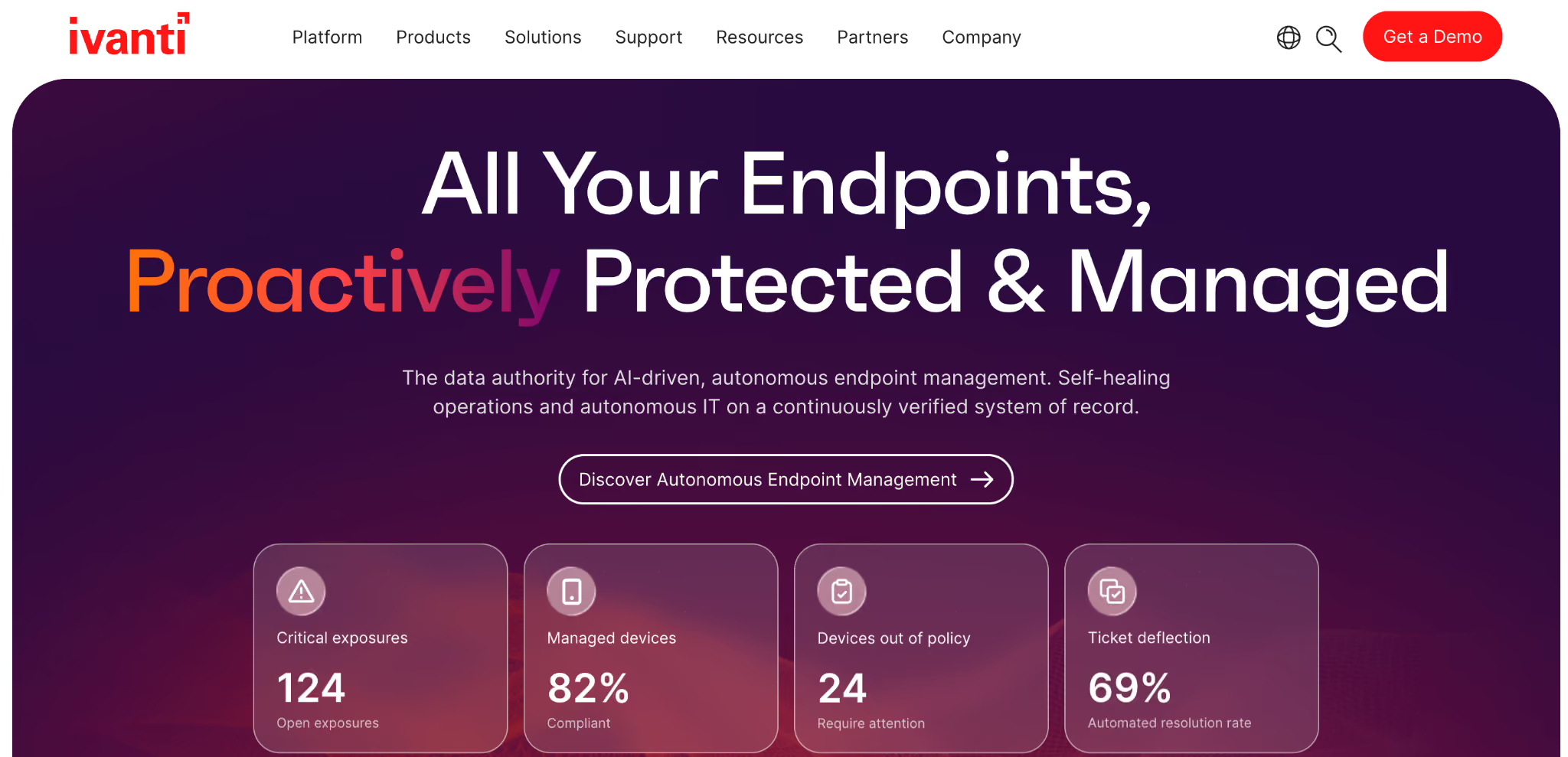
Ivanti Neurons is the best ServiceNow alternative for teams that want ITSM combined with endpoint and asset management.
Rebuilt from the Cherwell product line, it adds a low-code workflow designer plus Ivanti's endpoint, patch, and security overlap. That combination suits teams managing both service and devices.
Key features
- ITSM plus UEM: Combines service management with unified endpoint management.
- Low-code designer: Lets admins ship workflow changes without scripting.
- Asset discovery: Strong inventory tracking and patch management.
Pros
- ✅ Unifies ITSM with endpoint and asset control
- ✅ Low-code workflow customization
- ✅ Solid for hybrid and on-premises environments
Cons
- ❌ Trust took a hit after the 2024 Ivanti security incidents
- ❌ Pricing isn't published, and bundles vary widely
Best for
- Teams needing service and endpoint management together
- Hybrid or on-premises IT environments
Pricing
Ivanti Neurons uses custom pricing with typical annual contracts. See Ivanti's plans and pricing.
5. HaloITSM
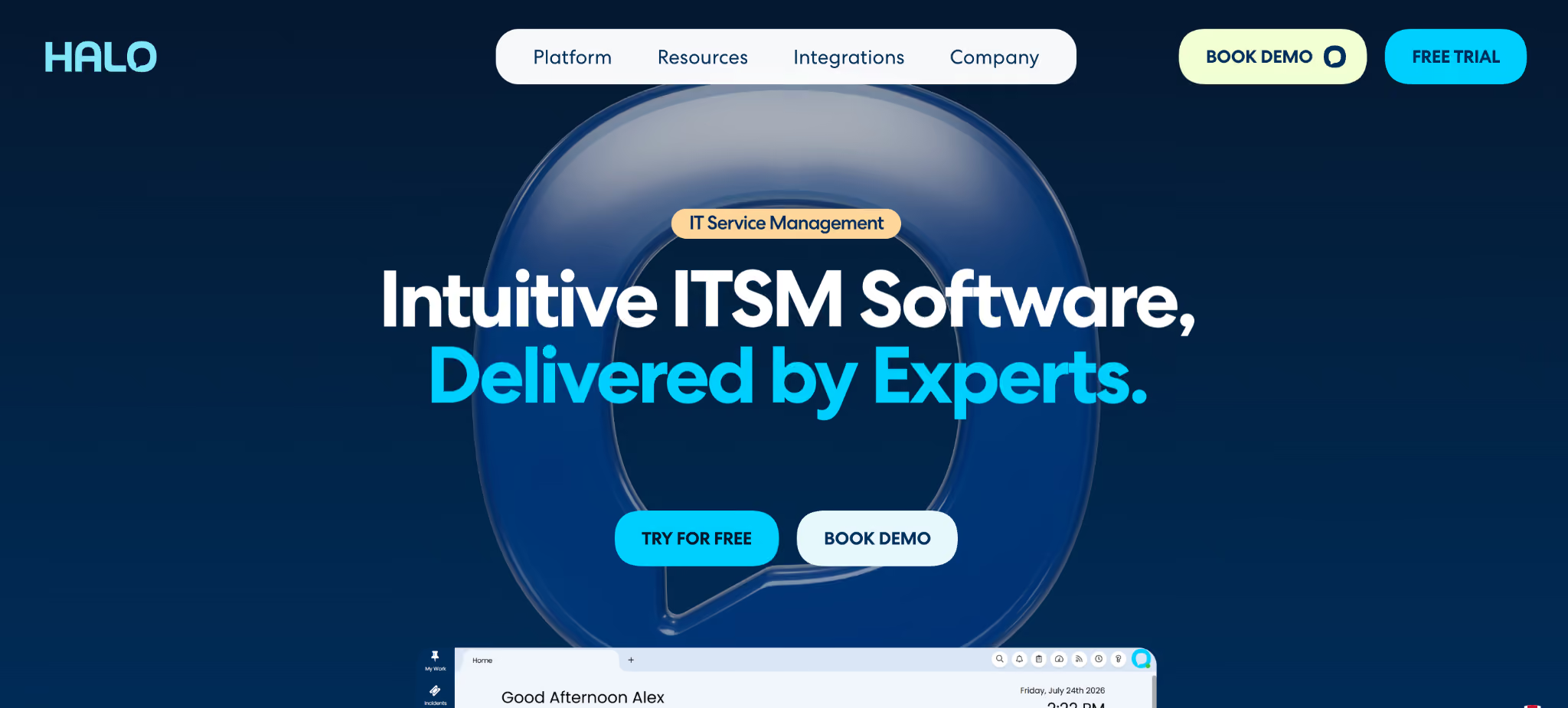
HaloITSM is the best ServiceNow alternative for teams that want predictable, all-inclusive pricing with no per-module surprises.
It bundles core ITIL capabilities, automation, asset management, and integrations into the base license, so the bill stays predictable. Reviewers on G2 and Capterra consistently praise the all-inclusive model and depth per dollar.
Key features
- All-inclusive licensing: Core ITIL, automation, ITAM, and integrations in the base price.
- Deployment flexibility: Cloud, third-party cloud, or on-premises at the same rate.
- Deep customization: Highly flexible workflows and configuration.
Pros
- ✅ Predictable all-in pricing with modules included
- ✅ Strong ratings for ease of use and support
- ✅ No lock-in across deployment options
Cons
- ❌ No permanent free plan, only a trial
- ❌ Reporting is less deep than some data-heavy rivals
Best for
- Teams wanting predictable, all-in pricing
- Organizations avoiding per-module cost creep
Pricing
HaloITSM is $99/agent monthly, billed annually, with all modules included. Large organizations can take an unlimited-license Enterprise package at a fixed $1M per year. See HaloITSM's pricing.
6. ManageEngine ServiceDesk Plus

ManageEngine ServiceDesk Plus is the best ServiceNow alternative for teams that want transparent pricing and an on-premises option.
It delivers ITIL-ready ITSM in cloud or self-hosted form, with a free tier for small teams. Its transparent, affordable pricing stands out against the custom-quote enterprise vendors.
Key features
- Flexible deployment: Cloud or fully on-premises.
- ITIL-ready modules: Incident, problem, change, and asset management.
- Free tier: A real free option for small IT teams.
Pros
- ✅ Transparent, affordable pricing
- ✅ On-premises deployment available
- ✅ Free tier for small teams
Cons
- ❌ Interface feels less polished than cloud-native rivals
- ❌ Deeper modules need higher tiers
Best for
- Teams wanting on-premises control
- Budget-conscious IT departments
Pricing
ManageEngine ServiceDesk Plus runs free on its Standard edition for up to 5 technicians. Paid plans bill annually, with Standard opening near $1,545/year, roughly $13/agent monthly at entry and less at higher volumes. See ManageEngine's pricing.
7. Zendesk

Zendesk is the best ServiceNow alternative for support-led teams that handle both internal and external tickets.
It's primarily a customer support platform that many IT teams adapt for internal service, strong on ticket management and reporting. It fits teams whose IT and customer support overlap.
Key features
- Unified ticketing: One workspace for internal and external requests.
- Strong reporting: Mature analytics and dashboards.
- Large app marketplace: Extensive catalog of integrations.
Pros
- ✅ Excellent ticketing and reporting
- ✅ Works for internal and customer support together
- ✅ Fast to deploy
Cons
- ❌ Lacks native ITSM features like change management
- ❌ Not a full ITIL platform out of the box
Best for
- Teams where IT also handles customer support
- Organizations prioritizing ticketing over full ITSM
Pricing
Zendesk Support Team starts at $19/agent monthly, with Suite Team at $55 and Suite Professional at $115, billed annually. See Zendesk's pricing.
8. SysAid
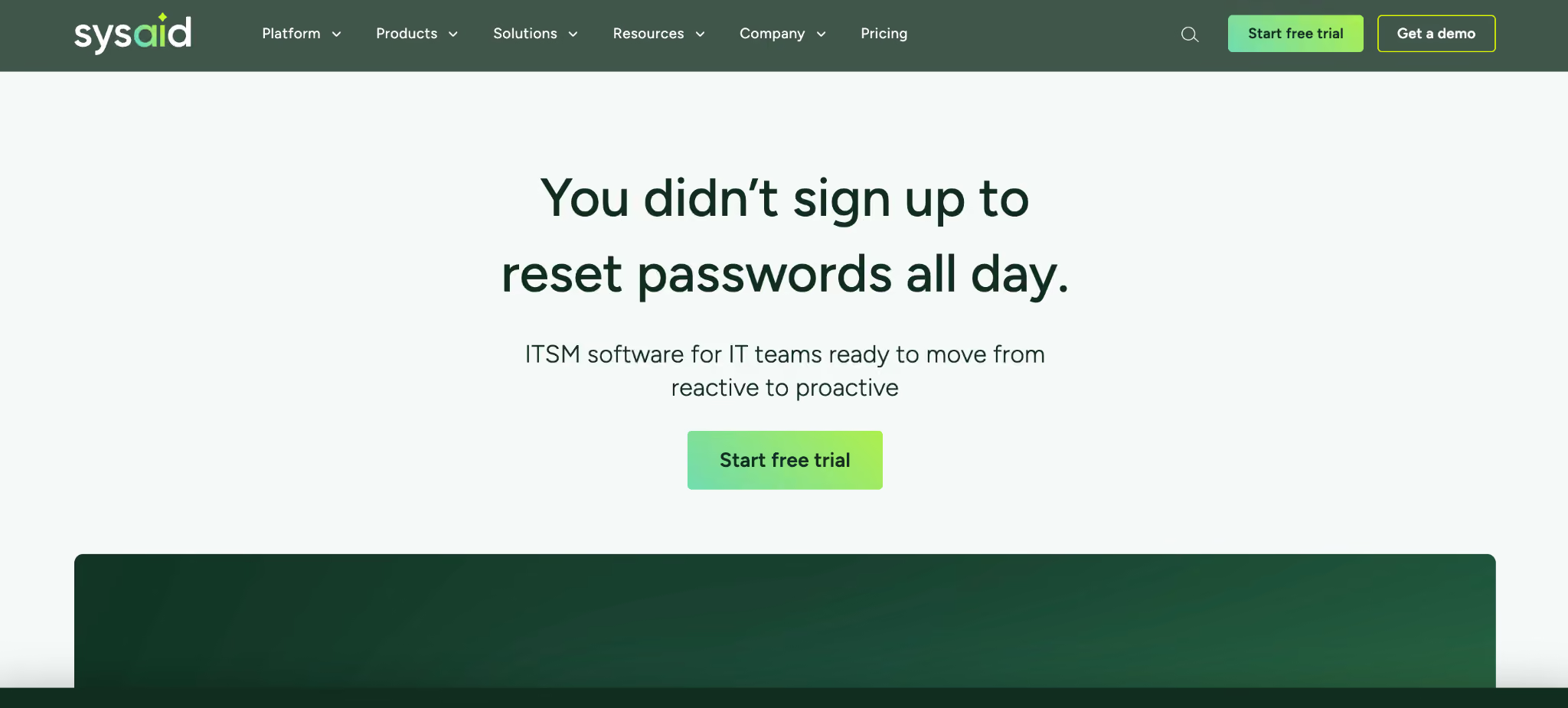
SysAid is the best ServiceNow alternative for teams that want solid ITSM paired with strong asset management and AI automation.
It offers Professional and Enterprise tiers, with an AI Agent Builder for custom automation on the higher plan. Hundreds of G2 reviews put it among the more established mid-market user bases here.
Key features
- ITIL package: Problem, change, and release management in the Professional plan.
- AI Agent Builder: Build or customize AI agents for ticket handling.
- Asset management: Strong ITAM with automation across workflows.
Pros
- ✅ Well-reviewed automation and reporting
- ✅ Established mid-market track record
- ✅ Cloud or on-premises deployment
Cons
- ❌ Enterprise tier is quote-based with a 20-agent minimum
- ❌ AI features and onboarding carry add-on fees
Best for
- Mid-to-large IT teams needing ITSM plus ITAM
- Organizations wanting configurable AI automation
Pricing
SysAid's Professional plan is $89/agent/month, with a custom-quoted Enterprise tier starting at 20 agents. See SysAid's pricing.
9. SolarWinds Service Desk
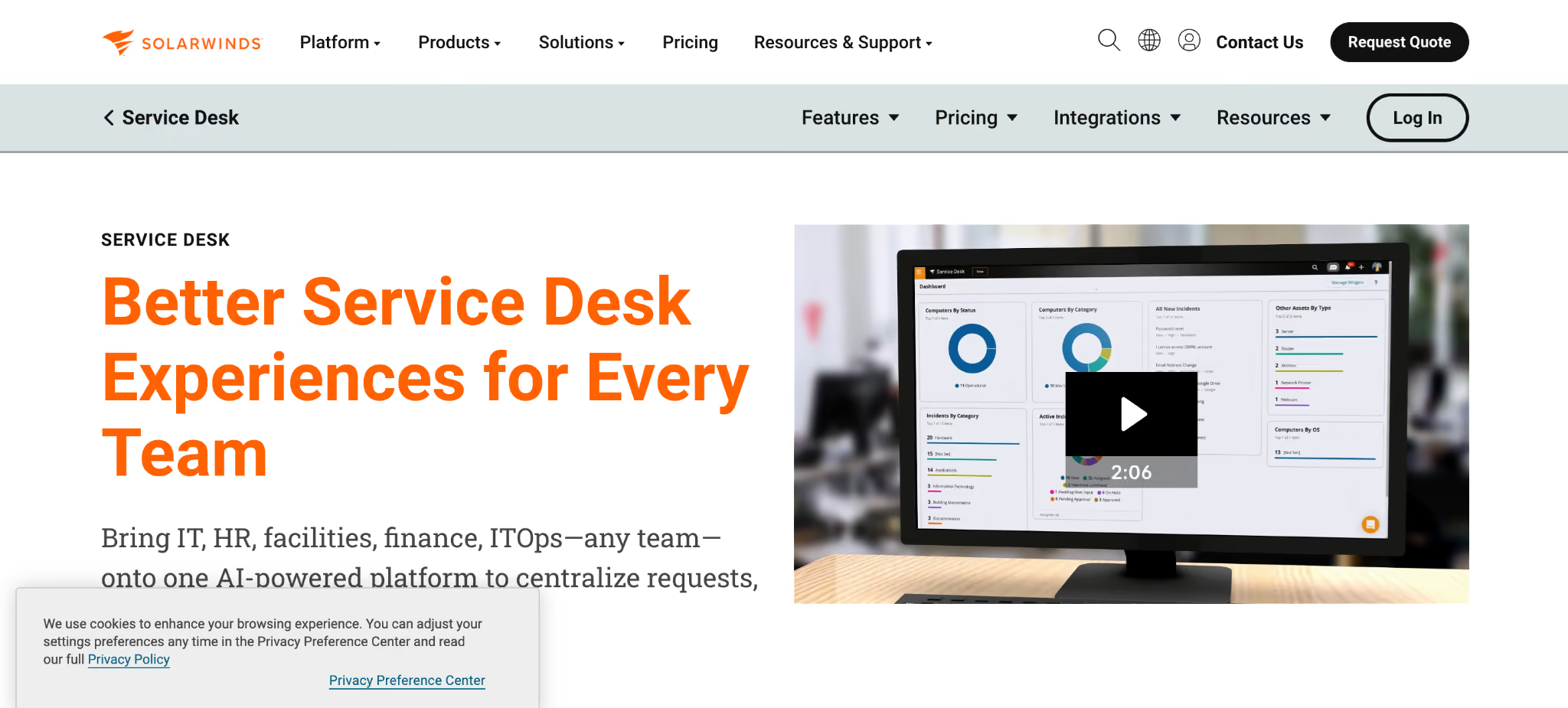
SolarWinds Service Desk is the best ServiceNow alternative for mid-market teams that want ITSM paired with strong asset management.
It combines incident and change management with solid IT asset management and a clean interface. It's a practical middle ground between lightweight helpdesks and enterprise suites.
Key features
- Integrated ITAM: Asset management built alongside service management.
- Automation: Workflow automation for common IT processes.
- AI-assisted ticketing: Smart suggestions and categorization.
Pros
- ✅ Strong asset management included
- ✅ Cleaner setup than enterprise suites
- ✅ Good fit for mid-market IT
Cons
- ❌ Higher entry price than some rivals
- ❌ Less customizable than ServiceNow
Best for
- Mid-market teams needing ITSM plus ITAM
- Organizations wanting service and asset management together
Pricing
SolarWinds Service Desk starts at roughly $39/agent monthly, with higher tiers for advanced features. See SolarWinds' pricing.
How to evaluate ServiceNow alternatives
The right choice comes down to matching a platform to your real needs. A few questions to work through:
- What's your actual scope? Be honest about whether you need full ITSM with CMDB and change management, or mainly incident and request handling. Paying for depth you won't use is why teams leave ServiceNow.
- How fast do you need to deploy? Cloud-native tools like Freshservice deploy in weeks, while enterprise platforms like BMC Helix run three to six months. Match the timeline to your runway.
- What's your total cost beyond the sticker price? Add implementation, add-ons, and higher tiers where the real features live. A low headline price can hide the true number.
- Does it fit your stack? Atlassian shops gain from Jira Service Management, while teams needing endpoint control lean toward Ivanti. Stack fit reduces friction.
- Do you need on-premises? Regulated or data-sensitive teams should confirm self-hosted options, which ManageEngine and some others provide.
When the real problem is building custom tools
Here's a pattern worth naming: many teams over-buy ServiceNow because they use it as a platform to build custom internal apps and workflows it was never shaped for.
When most of your ServiceNow spend goes toward bespoke forms, approval flows, and department-specific tools, an ITSM suite is the wrong tool for that job.
If that sounds familiar, the answer is a way to build those internal apps directly, with governance and IT controls. Superblocks is the governed enterprise vibe coding platform, built on a SOC 2 and HIPAA-aligned foundation.
Teams build internal apps with AI inside guardrails, with RBAC, audit logs, and code export. It turns shadow scripts into a system of record IT can see.
For example, Virgin Voyages had non-technical teams build 15+ production apps across seven departments with governance intact.
For structured ITSM, pick the right tool above. For the custom app-building underneath it, start with the Superblocks Quickstart Guide.
Or book a demo to see Clark AI generating governed internal apps in your own environment.
Frequently asked questions
What is the best ServiceNow alternative?
The best ServiceNow alternative depends on your needs. Freshservice leads for mid-market value, Jira Service Management for Atlassian teams, and BMC Helix for enterprise operations. Most teams choose based on scope, total cost, and how much of ServiceNow's depth they use.
Why do companies move away from ServiceNow?
Companies move away from ServiceNow mainly over cost and complexity. Standard ITSM runs around $100 per agent monthly; implementation can multiply that three to five times, and rollouts take months. Many teams pay for enterprise depth they never use.
What is the cheapest ServiceNow alternative?
The cheapest ServiceNow alternatives are Jira Service Management and ManageEngine ServiceDesk Plus. Jira starts at $17.65/agent/month with a free tier for 3 agents, and ManageEngine runs free for up to 5 technicians, then bills annually at about $13/agent.
Is Freshservice better than ServiceNow?
Freshservice is better than ServiceNow for mid-market teams that want full ITSM without enterprise cost or a long rollout. It delivers ITIL-aligned features at 55 to 70% lower total cost. ServiceNow stays stronger for large enterprises needing deep customization.
How long does it take to migrate from ServiceNow?
Migrating from ServiceNow takes anywhere from a few weeks to several months, depending on the platform and your customization. Cloud-native tools like Freshservice deploy fastest, while enterprise platforms like BMC Helix can take three to six months.
At Virgin Voyages, non-technical teams now build their own AI apps, with IT governance fully intact. The result: 15+ production apps, seven departments onboard, and zero dedicated frontend engineers.
At Matthews, a marketing manager with zero coding background built an app that auto-generates offering memorandums, cutting turnaround from days to hours. See how the brokerage is putting AI builders on every team, with full governance intact.


Stay tuned for updates
Get the latest Superblocks news and internal tooling market insights.
Request early access
Step 1 of 2
Request early access
Step 2 of 2

You’ve been added to the waitlist!
Book a demo to skip the waitlist
Thank you for your interest!
A member of our team will be in touch soon to schedule a demo.
production apps built
days to build them
semi-technical builders
traditional developers
high-impact solutions shipped
training to get builders productive
SQL experience required
See the full Virgin Voyages customer story, including the apps they built and how their teams use them.

"Those tools are great for proof of concept. But they don't connect well to existing enterprise data sources, and they don't have the governance guardrails that IT requires for production use."
Table of Contents
.png)

Multiple authors
How to Deploy Vibe Coded Apps to Production in 7 Steps
Learn how to deploy vibe coded apps in 7 steps. Identify your stack, fix the localhost and secret bugs AI leaves, then go live on a matching host.
%20(1).png)
%20(1).png)